
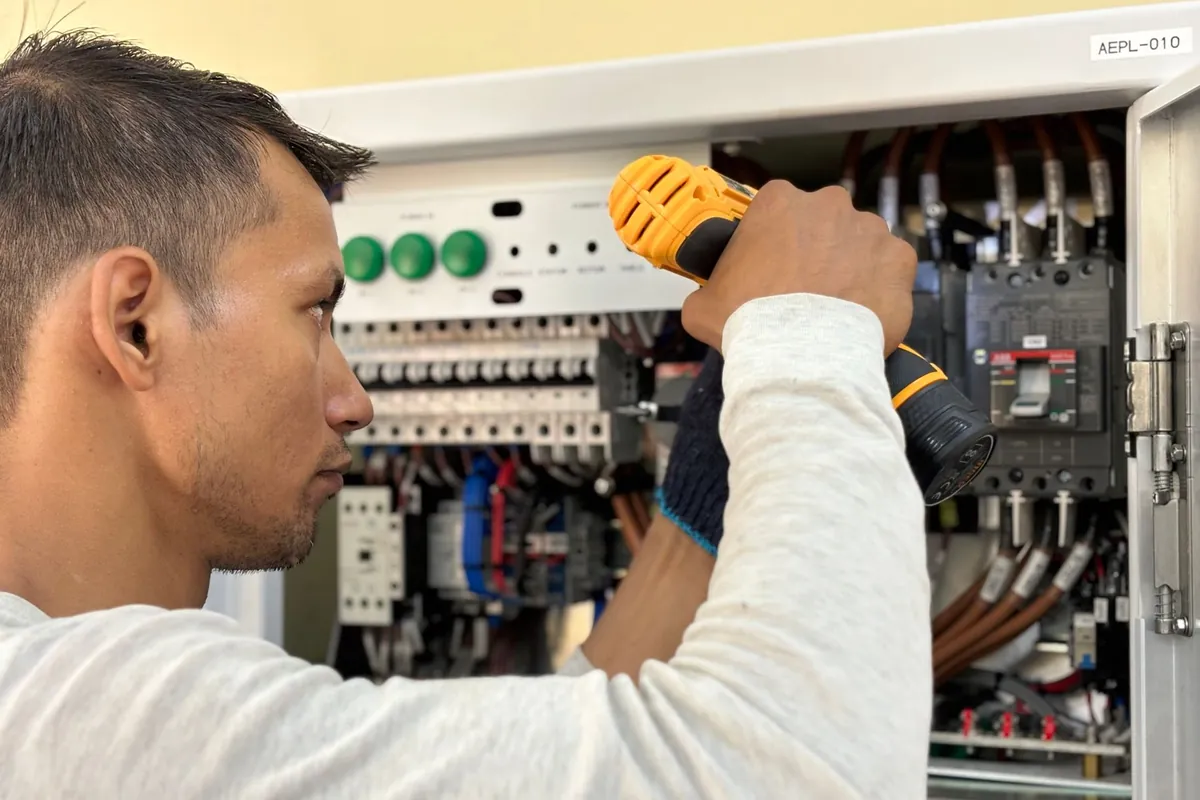
For an electrical contractor, a CRM is the record of every customer, every address, and every panel, circuit and fault you have ever touched there. This guide compares five tools on the CRM jobs that matter in electrical work: panel history per address, follow-up on quotes and inspections, and review requests.
How this guide was made: built from the vendors pricing and feature pages, checked on 31 October 2026, not from hands-on testing. Trial walkthroughs are in progress. Some links are affiliate links and may earn us a commission at no cost to you. That never changes a pick. Read our affiliate disclosure.
Quick verdict
- Best overall CRM for a small electrical contractor: Jobber. Property based client records with photos and the full job trail, plus follow-up automation on Connect at 99 dollars a month billed annually.
- Best if reviews and the address record drive your work: Housecall Pro. Review management included from Basic at 59 dollars, with property notes and entry instructions on the record.
- Best free starting point: HubSpot Free CRM. A real contact database with follow-up tasks at zero cost, but no scheduling, no invoicing and no service records.
- Best for larger companies only: ServiceTitan. The deepest customer records here, but no published price and a per technician quote.
The five tools at a glance
| Tool and plan | Starting price | Customer and service history | Follow-up automations | Review requests |
|---|---|---|---|---|
| Jobber Core | 29 dollars a month billed annually, 1 user. 49 dollars month to month | Yes, client record organised by property, with photos, jobs, quotes and invoices | Reminders and quote follow-ups start on Connect, 99 dollars billed annually | Via the paid Reviews add-on |
| Housecall Pro Basic | 59 dollars a month billed annually, 1 user. 79 dollars monthly | Yes, customer record with property notes and job history per address | Reminders included, deeper automation on Essentials and MAX | Review management included from Basic |
| Workiz Standard | No published price, quote from Workiz. 7 day free trial | Yes, client management with job history | 5 automations on Standard, 10 on Pro, 30 on Ultimate | Through the Genius Marketing add-on |
| ServiceTitan | No published price, per technician quote only | Yes, the deepest records here, including equipment history | Yes, built for office run follow-up | Yes, inside its marketing toolset |
| HubSpot Free CRM | Free, up to 2 users and 1,000 contacts | Contact records and notes only, no service history | Follow-up tasks and email built in, automation mostly paid | No built-in review requests |
The record an electrician actually needs
Five things have to live on the record at each address: panel brand, amperage and circuit notes, permit numbers and inspection results stored with the job (no tool here files the permit itself), follow-up on recurring safety inspections, follow-up on declined panel upgrade quotes, and a review request sent while the lights are back on.
Jobber: the property record with photos, at the lowest entry price
Jobber treats the client record as the centre of the business. Each client carries contact details, one or more properties, and the full trail of requests, quotes, jobs, invoices and payments, organised by property and holding photos, so panel photos, breaker layouts and circuit notes live on the address. The client hub lets customers approve quotes and pay without calling you.
The catch is where the automation sits. Core gives you the records, the hub and the calendar. Automated reminders and quote follow-ups start on Connect, at 99 dollars a month billed annually for one user, and that follow-up is what revives declined panel upgrades and deferred rewires. Review requests are not a plan feature, they run through the paid Reviews add-on. Payments run at 2.9 percent plus 30 cents on cards, and 1 percent on bank payments.
Best for: an electrical contractor of 1 to 12 techs that wants records, scheduling, quoting and invoicing in one system. Skip it if: you want review automation on the cheapest plan, because that is not on Core.
Housecall Pro: the address record, with reviews included early
Housecall Pro builds a customer profile for every client, with the addresses they own and property notes and entry instructions inside the record, so gate codes, alarm notes and panel locations are written down beside the job history. A tech arriving for a fault can see the panel work from two years ago. The standout is that review management sits in Basic, so review requests do not wait for a top tier or an add-on.
Basic costs 59 dollars a month billed annually for one user, or 79 dollars month to month. Essentials, at 149 dollars a month billed annually for 5 users, is the step up for a growing crew. Recurring service plans, which turn a one-off safety check into an annual inspection agreement, sit on MAX at 299 dollars a month billed annually for 8 users. Card payments start from 2.59 percent, bank payments at 1 percent. The trade-off against Jobber is the entry price, 59 dollars against 29 for a solo operator who mainly needs the record.
Best for: companies that win work on Google reviews and run inspection agreements as recurring plans. Skip it if: you are solo and price sensitive, because the starting tier costs double the Jobber entry point.
Workiz: capable records, automation counted out, price hidden
Workiz is a field service platform with client management built in: custom fields, a built-in phone system with call tracking and recording, and a counted number of automations, 5 on Standard, 10 on Pro and 30 on Ultimate. Service plans sit on Ultimate. A 7 day free trial is offered with no credit card.
The catch is the one that matters most in a buying guide: Workiz does not publish its plan prices. The official pricing page shows the three tiers and routes you to request pricing, so there is no list price to check before a sales conversation. Jobber and Housecall Pro both show their numbers up front.
Best for: a dispatch heavy company that wants its phone system and records in one place. Skip it if: you want to compare real prices before talking to sales.
ServiceTitan: the deepest CRM here, priced for bigger companies
ServiceTitan is the heavyweight. Its customer records are built for companies with a call centre: full service and equipment history per property, call recording tied to the customer, and marketing tools that track where every booked job came from. For a company running several crews, this is the strongest record-keeping of the five.
The catch is total. ServiceTitan publishes no prices at all. Its three packages, Starter, Essentials and The Works, are all priced per technician through a sales quote. There is no self-serve trial. It is simply a product aimed at a bigger business than this guide is for.
Best for: established companies with dispatchers and multiple crews. Skip it if: you are a small crew, because the records you need are available elsewhere at a published price.
HubSpot Free CRM: the free contact book, with clear limits
HubSpot is the odd one out, a general CRM rather than field service software, and it earns its place for one reason: it is genuinely free. The free tier allows up to 2 users and 1,000 contacts, and includes contact records, a deal pipeline for tracking bigger quotes, follow-up tasks and email tools. For a solo electrician keeping a spreadsheet of past customers, this is a real upgrade at zero dollars.
The limits are just as clear. HubSpot knows nothing about jobs. There is no scheduling, no dispatch, no trade invoicing, and no service record per address, so panel history and permit results have to be typed into notes by hand. Review requests are not built in. Starter, the first paid step, is 20 dollars a month per seat. Treat HubSpot as a free follow-up notebook beside your job software, not the system your business runs on.
Best for: a solo electrician or very small shop that wants an organised customer list and follow-up reminders for free. Skip it if: you need service history, scheduling and invoices in the same record, which is most working electrical contractors.
Which one fits your size
Solo electrician. Start with Jobber Core at 29 dollars a month billed annually for the address record, scheduling and invoicing together, and accept that automatic follow-ups wait for Connect. If money is the binding constraint, run HubSpot Free for follow-up tasks, and move when it starts to hurt.
Small crew, 2 to 5 techs. Pick Jobber Connect, from 99 dollars a month billed annually for one user, when automatic quote follow-ups and reminders are the point. Pick Housecall Pro Essentials, at 149 dollars a month billed annually for 5 users, when reviews and the property record pull in your work.
Growing company, 6 to 12 techs. Jobber Grow or Housecall Pro MAX both hold up at this size, with service plans on MAX at 299 dollars a month billed annually if inspection agreements are your growth plan. ServiceTitan enters at the top of this band, only with office staff to run it.
When a field service platform replaces a plain CRM. A standalone CRM works while the job is remembering people. It stops working when the job becomes dispatch, with several techs at several addresses and records that must update themselves from the job flow. Then the CRM inside Jobber or Housecall Pro should replace HubSpot, not sit beside it, because every fact typed twice goes stale once.
Honest limits of this guide
- This comparison is based on official vendor pricing and feature pages checked on 31 October 2026. Our free trial walkthroughs are still in progress, and hands-on notes will be added when they are done.
- Workiz and ServiceTitan publish no prices. Any number you see elsewhere for them is a quote given to someone else, not a verified price.
- Jobber showed promotional introductory pricing on its pricing page on the check date. This guide uses standard list prices throughout.
- Plan gating changes often in this category, so recheck the vendor page before you buy.
- All five tools are built mainly for the US and Canadian market, and calling and texting features vary by country.
Frequently asked questions
What CRM do most small electrical contractors use?
Most small electrical contractors do not run a standalone CRM at all. They use the customer records inside their field service software, most often Jobber or Housecall Pro, because those records hold panel history at each address next to the schedule, quotes and invoices.
How much does a CRM for an electrical contractor cost?
Prices run from free to quote only. HubSpot Free CRM costs nothing for up to 2 users and 1,000 contacts. Jobber Core starts at 29 dollars a month billed annually for one user, and Housecall Pro Basic starts at 59 dollars a month billed annually. Workiz and ServiceTitan publish no prices and quote per business.
Can a CRM store panel history for each address?
Yes, in the field service tools. Housecall Pro holds property notes and job history against each address, so panel brand, amperage and past faults sit on the customer record. Jobber organises the client record by property with photos, so panel photos and circuit notes live with the address. HubSpot has no service record, so that history is typed into notes by hand.
Is ServiceTitan worth it for a small electrical contractor?
For most companies under 10 to 12 techs, no. ServiceTitan has the deepest records here, but publishes no prices, sells per technician through a sales quote, and is built for companies with office staff and multiple crews. A small shop gets the history and follow-up it needs from Jobber or Housecall Pro at a published price.
Prices and plan features verified on vendor official pages on 31 October 2026. Standard list prices are used throughout, not introductory promotions.
Related reading: our best software for electricians roundup compares the wider field, our Jobber vs Housecall Pro for electricians comparison judges the two platforms head to head, and the electricians software guides hub collects the rest.